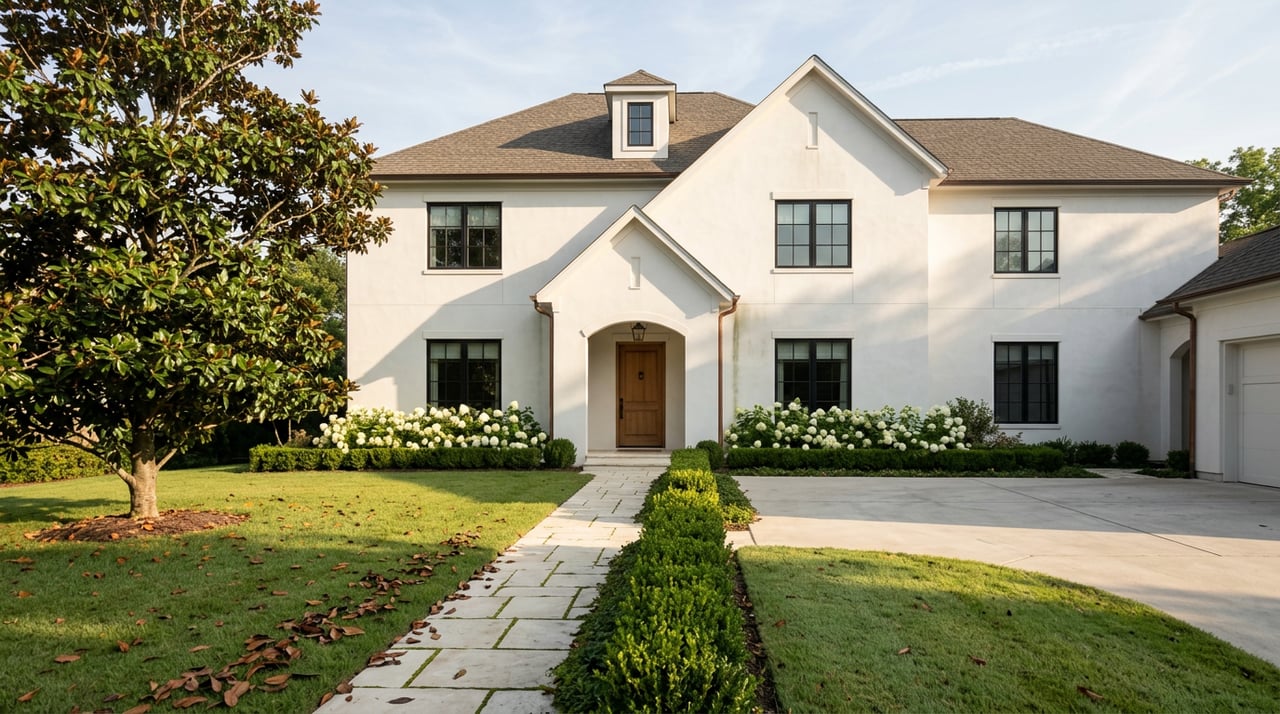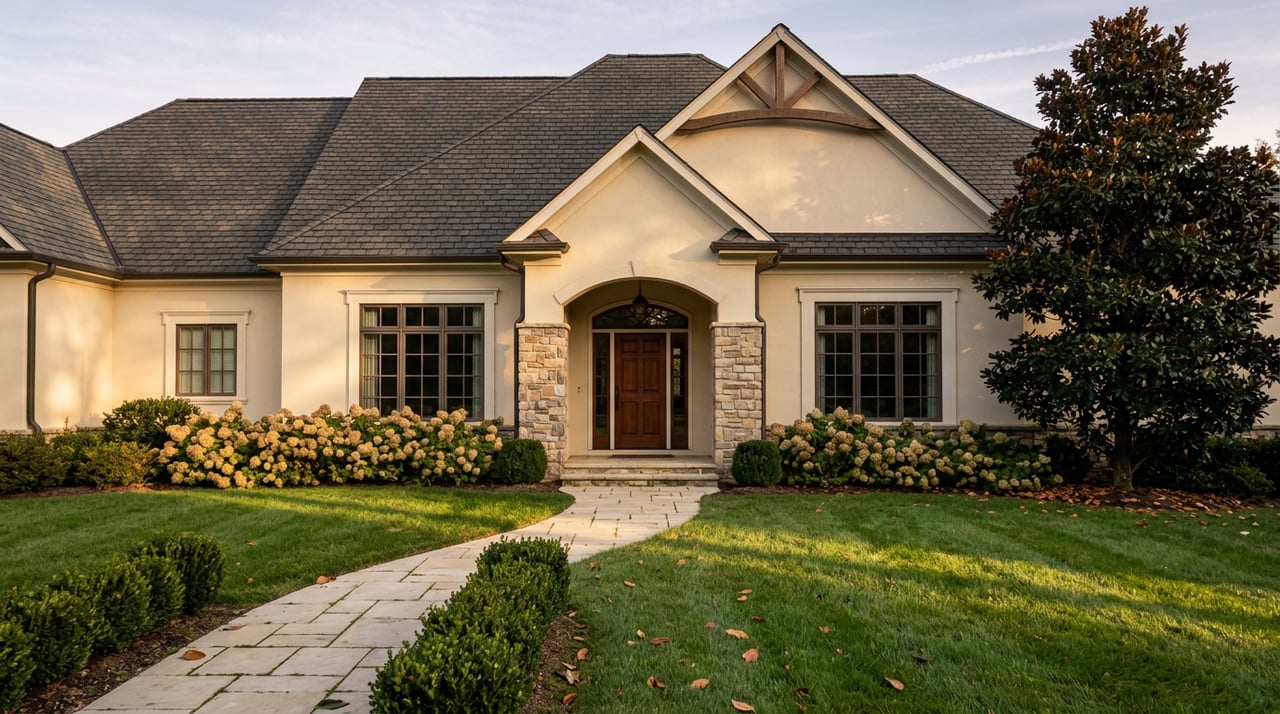
A buyer cross-shopping Weddington against Indian Land or Fort Mill usually builds the same spreadsheet. Price per square foot in one column, lot size in another, school zone in a third. The numbers look close enough to treat as the same product in different towns. Then the buyer tours a new-construction home in Weddington on three-quarters of an acre, tours a similar price point in Fort Mill on a quarter acre, and assumes Weddington is simply the better deal, or the pricier outlier, depending on which way the comparison runs.
Neither read is right. The lot sizes aren't a builder's choice or a marketing decision about privacy and curb appeal. They're a function of what's under the ground, not what's on it.
The Line in the Zoning Code Nobody Reads
Weddington's zoning ordinance sets a 40,000-square-foot minimum lot size across most of the town's residential districts, which works out to roughly an acre. You can find the language yourself in Chapter 58 of the town's code of ordinances. It's the kind of ordinance detail that shows up in every listing description as a selling point: spacious, private, room to breathe. What it doesn't show up as, anywhere in the marketing, is the actual reason the number is 40,000 square feet and not 15,000 or 8,000.
There is no municipal sewer running to any residential neighborhood inside Weddington town limits. None. Every home, whether it's a 1990s brick colonial or a new luxury build going up this year, sits on a private well or shared community water and a private septic system. That single infrastructure gap is why the lot minimum exists at the size it does.
What the Soil Has to Do With It
Septic systems don't send wastewater to a treatment plant. They rely on a drain field on the property to absorb and filter what the house produces, and the size of that drain field is dictated by soil type, household size, and the number of bedrooms the home can support. A town on municipal sewer can subdivide down to whatever the zoning code allows, because a central treatment plant handles the volume regardless of lot size. Weddington can't do that math. Its lot sizes are set by what individual soil can process, not by what a developer would prefer to build on a given parcel.
That's the detail the spreadsheet comparison misses. A buyer treating Weddington's acre and Fort Mill's quarter acre as two versions of the same product is comparing a place where infrastructure sets a hard ceiling on density against a place where a sewer main removes that ceiling entirely. The acre in Weddington isn't upgrade or upsell. It's the amount of ground the county requires to safely handle what one household's plumbing sends into the yard every day.
Why the Spreadsheet Comparison Breaks
Here's where it gets specific enough to matter for an actual offer. In sewer-served new-construction communities around Fort Mill and Indian Land, buyers commonly see lots in the quarter-to-third-acre range at price points where Weddington and Marvin lots run three-quarters of an acre and up. Run a straight price-per-square-foot or price-per-acre calculation across that gap and Weddington looks either wildly overpriced or wildly undervalued, depending on which direction you push the math. Both conclusions miss the point. You aren't buying the same zoning product with a different price tag attached. You're buying two different infrastructure systems, and the land itself is doing different work in each one.
That distinction matters even more once you notice it isn't unique to Weddington. Look one town over.
Marvin's Version of the Same Rule
Marvin has spent three decades writing land use plans specifically to protect open space, tree canopy, and large residential lots, and the village has kept its zoning residential rather than commercial. There's no downtown in Marvin, and that's a deliberate outcome of the zoning, not an accident of slow growth. The Marvin Development Ordinance, adopted by the Village Council in 2024 after a public hearing that spring, formalized the same low-density approach Weddington has followed for years. You can review the planning documents behind that decision on Marvin's Planning & Zoning page.
Inventory in Marvin leans custom and semi-custom on one to two acre lots, with named communities like Marvin Creek, Providence Downs South, The Preserve at Marvin, and Firethorne anchoring the standing stock. Courtyards at Marvin is the exception worth knowing about if a buyer wants the Marvin address without the acreage commitment. It's a lower-maintenance villa-style community built for buyers who want the school zone and the name without a full acre to maintain.
Both towns land on the same trade. Buyers get privacy, tree canopy, and a home that isn't crowded by a neighbor's fence line. What they give up is a walkable commercial center, because the same zoning that protects the large lots also keeps grocery stores, gas stations, and restaurants out of the village limits. Residents drive to Waxhaw, Ballantyne, or Indian Trail for that. It's the same mechanism showing up twice, once as a lot-size rule and once as a retail absence, and both trace back to a town that decided decades ago not to build the infrastructure that would let density increase.
The Renovation Question Nobody Budgets For
This is where the septic-driven lot size stops being background trivia and starts affecting a real decision. Adding a bedroom, a deck, a pool, or a detached structure to a home on an existing septic system in this part of Union County triggers a required review before construction starts. The county isn't checking out of curiosity. It's confirming whether the drain field already on that lot can absorb the additional load a fourth bedroom or a finished basement would add, and if it can't, expansion of the septic system becomes part of the renovation budget whether the buyer planned for it or not.
Before writing an offer on a home in Weddington or Marvin that you're planning to expand, a few questions belong in due diligence alongside the standard home inspection:
- Ask for the property's septic permitting history, including the Improvement Permit and any Construction Authorization on file, and confirm the bedroom count on those documents matches the listing.
- Schedule a septic inspection during your due diligence period rather than assuming a recent pumping means the system is healthy. Pumping and inspection check different things.
- If the home has a bonus room, flex space, or finished basement that could plausibly become a bedroom later, ask directly whether the septic system was sized with that future use in mind.
- For larger equestrian or estate lots, ask when the drain field was last evaluated. Soil compaction from years of horse traffic changes how a field absorbs water over time.
None of this shows up as a line item on an appraisal. It shows up in the negotiation, particularly if an inspection surfaces drain field stress or an undersized repair area after the contract is already signed.
What This Means If You're Comparing These Towns to a Sewered Suburb
The honest way to compare Weddington or Marvin against Fort Mill or Indian Land isn't price per square foot. It's asking what each dollar is actually buying given the infrastructure underneath it. In a sewered suburb, the price reflects proximity, school zone, and finish level on a lot that could theoretically be smaller because the treatment plant doesn't care how many houses feed into it. In Weddington and Marvin, part of that same price is buying land that the county has determined your household's own wastewater needs to safely process, which means the acre isn't going anywhere and isn't getting subdivided by a future developer either. For buyers who value that permanence, and for the move-up family weighing a UCPS school zone against a shorter commute, that's the actual trade being made, not just a preference for a bigger yard.
FAQ
Will Weddington or Marvin ever get municipal sewer? There's no active plan to extend sewer mains into either town's residential districts. Both towns have built their current ordinances around the existing on-site wastewater pattern, so buyers should plan on well and septic for the foreseeable ownership horizon.
Does septic show up in the home appraisal? Not typically as its own line item. It surfaces in the negotiation instead, especially if an inspection during due diligence turns up drain field stress or a repair area that's undersized for the home's bedroom count.
How often does a septic system in this corridor need to be pumped? General guidance runs every three to five years for most households, tightening toward two to three years for larger households or homes that entertain frequently. Homes with pretreatment or pump systems carry additional state-mandated inspection intervals.
Can a large lot in Weddington or Marvin be subdivided later? Not under current zoning. The minimum lot sizes in both towns exist specifically to prevent the kind of subdivision that would outpace what individual septic systems can handle, so the acre a buyer purchases today is the acre that stays with the property.
If you're weighing Weddington or Marvin against a sewered suburb and want to know what a specific lot's septic capacity actually supports, before you write an offer, The Kim Hamrick Team knows this corridor well enough to walk you through it property by property. Get your instant home valuation and let's talk about what your next move actually requires.