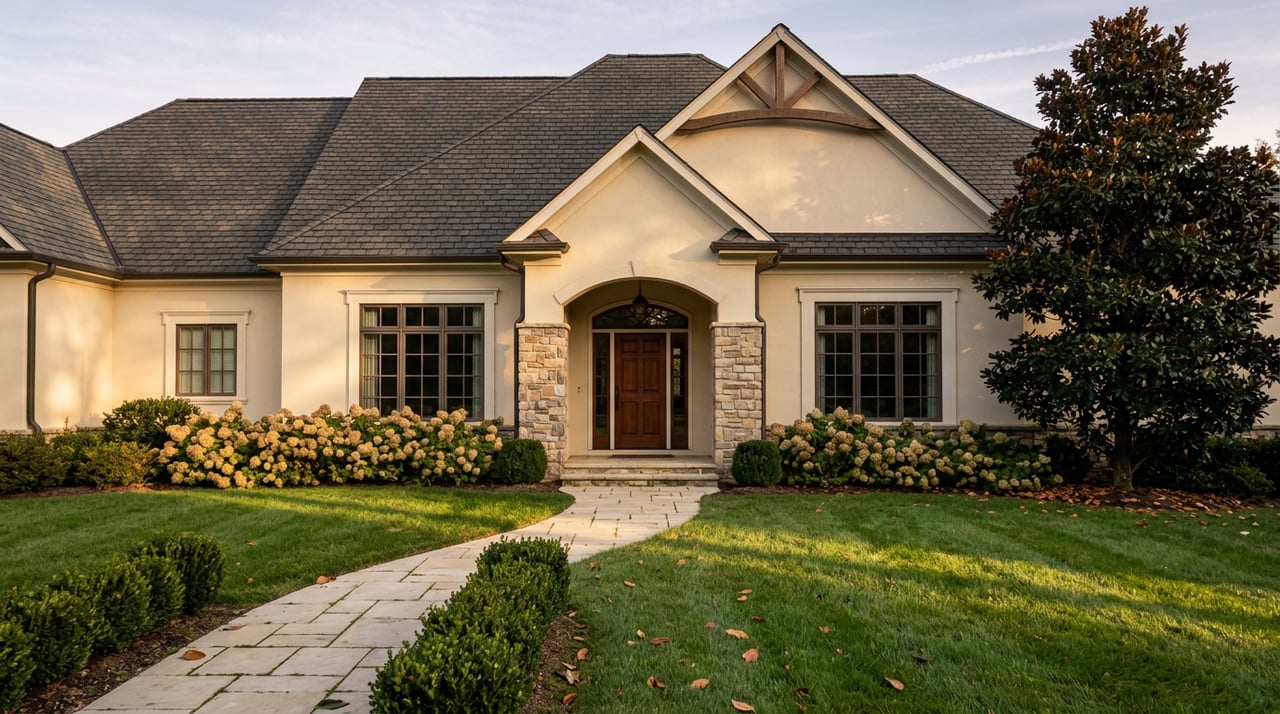
Two homes, same square footage, same bedroom count, same general zip code. One appraises exactly at contract price. The other comes in $40,000 short, leaving the buyer with a costly problem to resolve. Nothing about the second home is worse. It just happens to sit inside a brand-new gated enclave where nobody has sold a comparable house yet.
That is the version of South Charlotte's market that doesn't show up in a median price headline. The area is absorbing new construction faster than almost any other part of the metro, and the newest homes are often the ones most likely to run into trouble at the one moment in the transaction where trouble is expensive to fix.
The Number an Appraiser Actually Needs
An appraisal isn't a judgment about whether a home is nice. It's a search for recent, similar sales close enough in location, size, and age to justify the number on the contract. Builders set list prices based on what they need to hit margin and what the market will bear during a sales push, not necessarily on what a handful of prior closings in that same subdivision can support.
When a new community is still in its first phase, that comp set can be thin to nonexistent. If the appraisal comes in under contract price, the builder typically doesn't lower the price to match. Custom and semi-custom construction carries the highest version of this risk, because unique layouts and finishes have no direct match to compare against at all.
Two South Charlottes, Two Comp Environments
South Charlotte isn't one appraisal environment. It's at least two, sitting a few miles apart.
On one side are micro-communities built around a small footprint. The Estates at Rea Farms is a gated enclave of only seven custom homes near Ballantyne and Waverly. Ross Farms, built by TRI Pointe Homes, is a small designable townhome community inside Ballantyne itself. A handful of closings, sometimes fewer than ten, is the entire comp pool an appraiser has to work with.
On the other side are neighborhoods with decades of sales behind them. Ballantyne Country Club has been trading golf-course homes for years. Providence Country Club, off Providence Road near I-485, has a sales history stretching back to homes built in the high $400s ranging up past $1 million across 3,400 to 6,800 square feet. Providence Crossing, built in the mid to late 1990s by DR Horton and Cherry Homes, has a comp trail that goes back nearly thirty years. Blakeney, Stone Creek Ranch, Weston Glen, Reavencrest, and Providence Pointe all fall into this same deep-history category.
| Comp environment | Example communities | Appraisal characteristic |
|---|---|---|
| New, small-phase construction | The Estates at Rea Farms, Ross Farms | Thin or no direct comps, higher risk of gap |
| Established, long-sold neighborhoods | Ballantyne Country Club, Providence Country Club, Providence Crossing | Deep sales history, more predictable appraisal |
Same zip code, same school assignments in many cases, completely different odds of a clean appraisal.
What Builder Incentives Are Actually Covering For
The incentive stack that comes with new construction right now, rate buydowns, design credits, closing cost contributions, can make a new build look like the better financial deal on paper. It's worth separating what an incentive actually does from what it doesn't do. A $15,000 rate buydown lowers your monthly payment. It does nothing to change what an appraiser will find in the county's sales records if the contract price outruns the comp set.
A buyer comparing a $650,000 new build against a $650,000 resale in an established Ballantyne section should ask a specific question before writing an offer: how many closed sales inside this exact community, in the last six months, support this price. If the honest answer is two or three, that's useful information regardless of how generous the builder's incentive package looks.
The math that makes new construction attractive up front is a different math than the one that determines whether the loan actually funds at that number.
The Tax Bill Waiting Behind the 2027 Revaluation
There's a second layer to this that plays out after closing, not before it. Mecklenburg County conducts a full countywide revaluation every four years. The most recent one took effect January 1, 2023, and the next is scheduled for 2027.
A resale home in an established South Charlotte neighborhood already had its assessed value reset in that 2023 cycle. The current combined Mecklenburg County and City of Charlotte rate runs close to $0.77 per $100 of assessed value.
A Builder Who Knows Both Sides of the Line
Ballantyne's production builder history is part of why this pattern is so visible right now. Knotts Builders, the company HGTV selected to construct its 2026 Dream Home on Lake Wylie, got its start building in Charlotte's Ballantyne area before relocating its office to Fort Mill in 2024. A former Knotts model home built during that Ballantyne era is currently back on the resale market in the neighborhood, more than 4,600 square feet, five bedrooms, five baths, priced against decades of Ballantyne comps rather than the thin comp set of a brand-new phase.
That's the reverse case of everything above. A well-built home from an established phase of an established neighborhood carries the appraisal advantage that a brand-new gated micro-community doesn't have yet. It also shows how the same builders now work both sides of the state line, so the appraisal math described here doesn't stop at the Mecklenburg County border. It follows the builder into Fort Mill and Indian Land too.
What This Means If You're Comparing New Construction to Resale
Before comparing a new build to a resale on price alone, ask the builder or your agent how many homes in that specific community have closed in the last two quarters. Ask whether the incentive is being applied to the base price or layered on top of design upgrades, since that changes what the appraiser is actually being asked to support.
None of this makes new construction a bad choice. It makes the appraisal step something worth understanding before you're the one standing in the gap between contract price and appraised value with the clock already running.
If you're weighing a new build against an established South Charlotte neighborhood and want a read on how a specific community's comp history actually looks, that's a conversation worth having before you write an offer, not after. The Kim Hamrick Team works this exact corridor on both sides of the state line and can walk you through what the numbers on a specific address actually support. Get your instant home valuation to start the conversation.
This article is general information, not legal, tax or financial advice. Consult a qualified professional about your situation.